



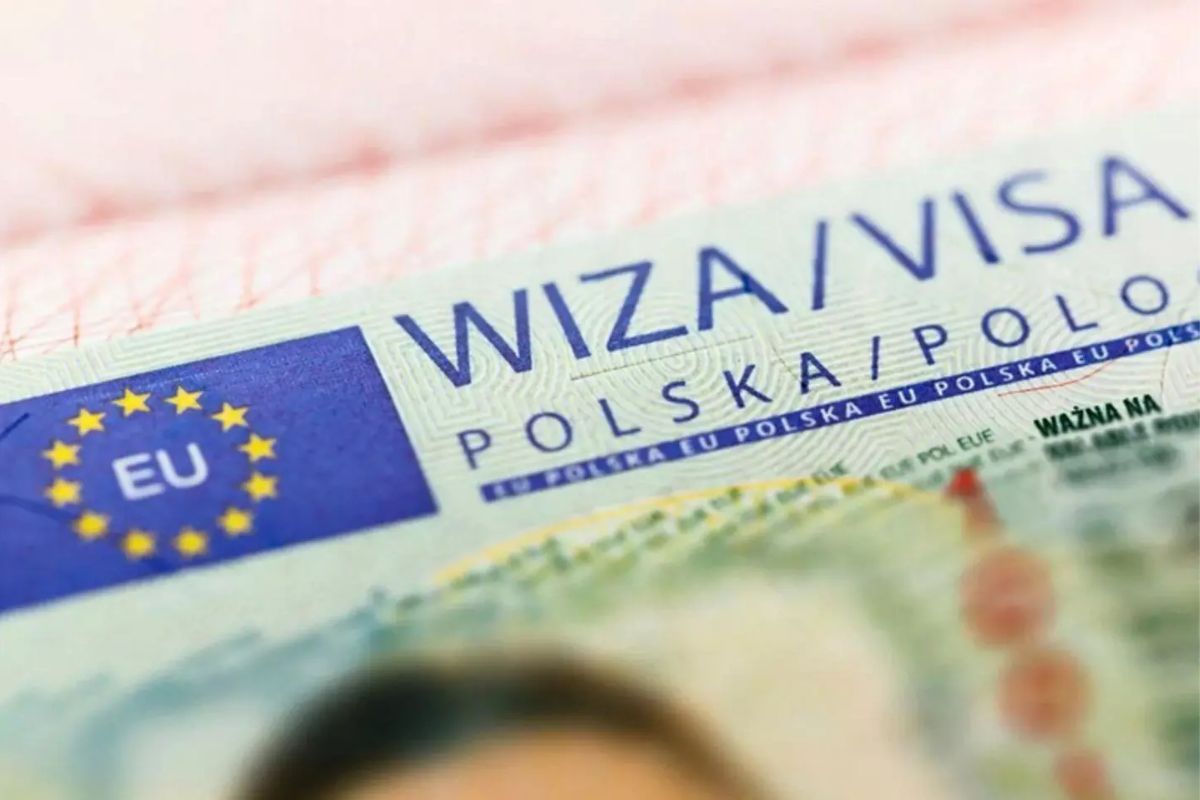
Poland Work Permit
Poland has transitioned from a labor-exporting economy to one of Europe’s strongest employment engines. With consistent GDP growth, industrial expansion, and deep integration within the European Union, the country has become a high-demand destination for skilled and semi-skilled foreign professionals.
For serious migration aspirants, securing a Poland work permit is not merely about overseas employment—it is a strategic positioning move within the European labor ecosystem.
This advisory dissects Poland’s work authorization architecture, employer dynamics, competitive landscape, approval psychology, and forward-planning insights to help applicants approach the process with precision rather than assumption.
Why Timing Matters in Poland’s Economic Momentum?
Poland stands as one of the EU’s fastest-growing economies, driven by manufacturing, logistics, IT services, automotive production, food processing, and infrastructure development. Major global investors—including German, American, Korean, and Scandinavian firms—operate extensive facilities across cities like Warsaw, Kraków, Wrocław, Poznań, and Gdańsk.
The demand for foreign workers stems from two structural realities:
- Rapid economic growth outpacing domestic workforce supply.
- Large-scale emigration of Polish nationals to Western Europe.
This labor gap has created sustained demand across multiple sectors, making the Poland work permit framework one of the most active in Central Europe.
However, while opportunity exists, regulatory scrutiny has increased. Authorities now evaluate employer credibility and labor market justification more strictly than before. Strategic preparation is therefore critical.
Understanding the Authorization Structure Beyond Surface-Level Knowledge
Poland operates an employer-sponsored authorization system. Unlike points-based immigration systems, approval depends heavily on job offer validity and labour market testing compliance.
The standard pathway involves:
- Employer securing a work permit approval from the Voivodeship office.
- A candidate applying for a national D-type visa linked to employment.
- Residence registration upon arrival.
The Poland visa for work is not an independent migration stream; it is entirely job-offer dependent. Therefore, the quality of the employment contract determines the strength of the application.
Applicants must understand that Poland’s system is compliance-driven. Even minor documentation inconsistencies can delay processing.
Labour Market Strategy: Where Real Opportunities Exist
Not all sectors offer equal approval feasibility. Based on current market demand, the strongest sectors include:
- Manufacturing and production line operations
- Construction and infrastructure projects
- Logistics and warehouse management
- Automotive assembly and maintenance
- IT development and cybersecurity
- Hospitality and seasonal tourism roles
The surge in Poland work visa jobs within manufacturing and logistics is directly linked to supply chain shifts within Europe. Companies relocating operations from Western Europe to Poland have increased foreign hiring significantly.
Strategic applicants should focus on sectors with documented labour shortages rather than saturated professional categories.
Employer Credibility
A critical but often underestimated factor is employer compliance history. Polish authorities assess:
- Tax payment consistency
- Business registration status
- Financial capacity to pay the salary
- Labour law compliance
- History of foreign worker sponsorship
An application tied to a financially unstable or newly formed employer faces higher scrutiny. The Poland work permit process is as much about employer reliability as it is about applicant qualifications.
Before accepting an offer, applicants should request employer registration documents and verify legitimacy through Poland’s public business registry.
How Are Applications Assessed?
| Evaluation Factor | Relative Weight | Risk Level if Weak | Strategic Optimization Insight |
|---|---|---|---|
| Employer Compliance History | Very High | High rejection probability | Choose established companies with a tax track record |
| Labour Market Test Outcome | High | Delays or denial | Target shortage occupations |
| Salary Alignment with Sector | High | Scrutiny trigger | Ensure wage meets regional norms |
| Qualification-Job Match | Medium-High | Additional documentation request | Align CV precisely to the job role |
| Contract Duration & Stability | Medium | Short validity | Prefer contracts longer than 12 months |
| Documentation Accuracy | Medium | Processing delays | Use certified translations |
This matrix highlights that approval psychology revolves around economic credibility and labour protection compliance.
Salary Structures and Financial Planning
Poland’s minimum wage regulations and sectoral pay standards must be respected. Authorities monitor underpayment patterns closely to prevent labour exploitation.
Urban centers like Warsaw and Kraków offer higher wages in IT and finance roles, while industrial cities provide competitive salaries in manufacturing.
Applicants should calculate:
- Gross salary versus net take-home pay.
- Cost of living in the specific city.
- Social insurance contributions.
- Health coverage obligations.
A Poland work permit offers financial viability when approached with realistic cost modeling rather than inflated expectations.
Processing Timelines and Strategic Timing
Standard processing for employer approval ranges between 4 to 12 weeks, depending on region and application volume. Visa appointments may extend timelines further.
Applicants planning to apply poland work visa from India should account for:
- Degree legalization requirements.
- Police clearance timelines.
- Appointment scheduling at VFS or consular centers.
- Employer responsiveness in submitting supplementary documents.
Strategic timing matters. Peak seasonal hiring can slow administrative workflows. Early preparation reduces uncertainty.
Common Rejection Triggers and Risk Mitigation
Polish authorities increasingly monitor fraudulent job offers and shell companies. Rejections commonly occur due to:
- Salary below industry benchmark.
- Inconsistent job description versus applicant qualifications.
- Incomplete employer documentation.
- Suspicion of labor exploitation practices.
- Insufficient financial stability proof from the employer.
Applicants must treat the process as a compliance audit rather than a paperwork submission.
A properly structured Poland work permit application anticipates risk areas rather than reacting to objections.
Transition Pathways: Beyond Initial Employment
One of Poland’s strongest advantages is mobility within the EU framework. After legal employment and residence continuity, applicants may:
- Renew work authorization.
- Transition to long-term EU residence status.
- Explore employer changes (with new permit approval).
- Potentially qualify for permanent residence after an extended legal stay.
Poland’s strategic EU membership makes the country a practical entry point into broader European professional networks.
The Poland work permit thus serves as both an employment tool and a regional positioning instrument.
Profile Positioning for Indian Applicants
Indian professionals increasingly secure roles in IT, engineering, logistics management, and production supervision. However, competition is intensifying.
To enhance competitiveness:
- Align CV formatting to European standards.
- Highlight quantifiable achievements.
- Demonstrate language adaptability (basic Polish familiarity adds an advantage).
- Avoid generic job applications; target sector-specific employers.
Candidates who approach the process strategically, rather than mass-applying to random Poland work visa job,s tend to secure more credible offers.
When planning to apply poland work visa, document precision and employer validation become decisive factors.
Market Trends Shaping the Next Five Years
Poland is investing heavily in:
- Renewable energy projects.
- Semiconductor and electronics manufacturing.
- Defence and heavy engineering sectors.
- IT outsourcing and AI development.
Labor shortages in technical and operational roles are expected to continue. However, regulatory oversight will also tighten to combat misuse.
Applicants entering the market now benefit from active demand but must meet increasing compliance expectations.
The Poland work permit opportunity remains strong—but increasingly structured.
How can Nexuscore Overseas help?
Nexuscore Overseas approaches global mobility through a strategic advisory lens. We evaluate employer credibility, labor market alignment, salary structuring, and documentation compliance before initiating any process.
Our team assists with profile positioning, contract analysis, document preparation strategy, and risk mitigation planning. Rather than treating the process as a transactional filing, we focus on long-term stability and regulatory alignment.
For structured and professional guidance, consult experienced Immigration Consultants in Noida to convert opportunity into a secure and well-planned transition.
Yes, but a new employer must secure fresh approval before you begin working. Unauthorized job changes can lead to permit cancellation and residence complications. Strategic employer selection from the start minimizes disruption risk.
Not universally. IT and multinational corporate roles often operate in English. However, basic Polish knowledge improves employability, workplace integration, and long-term residence prospects, especially in manufacturing and public-facing sectors.
Yes. After continuous legal residence and employment, applicants may qualify for long-term EU resident status or permanent residence, provided income stability, tax compliance, and integration requirements are met.
Seasonal permits provide short-term entry but limited settlement stability. While useful for initial exposure, they require careful planning to transition into longer-duration authorization without interrupting legal status.